


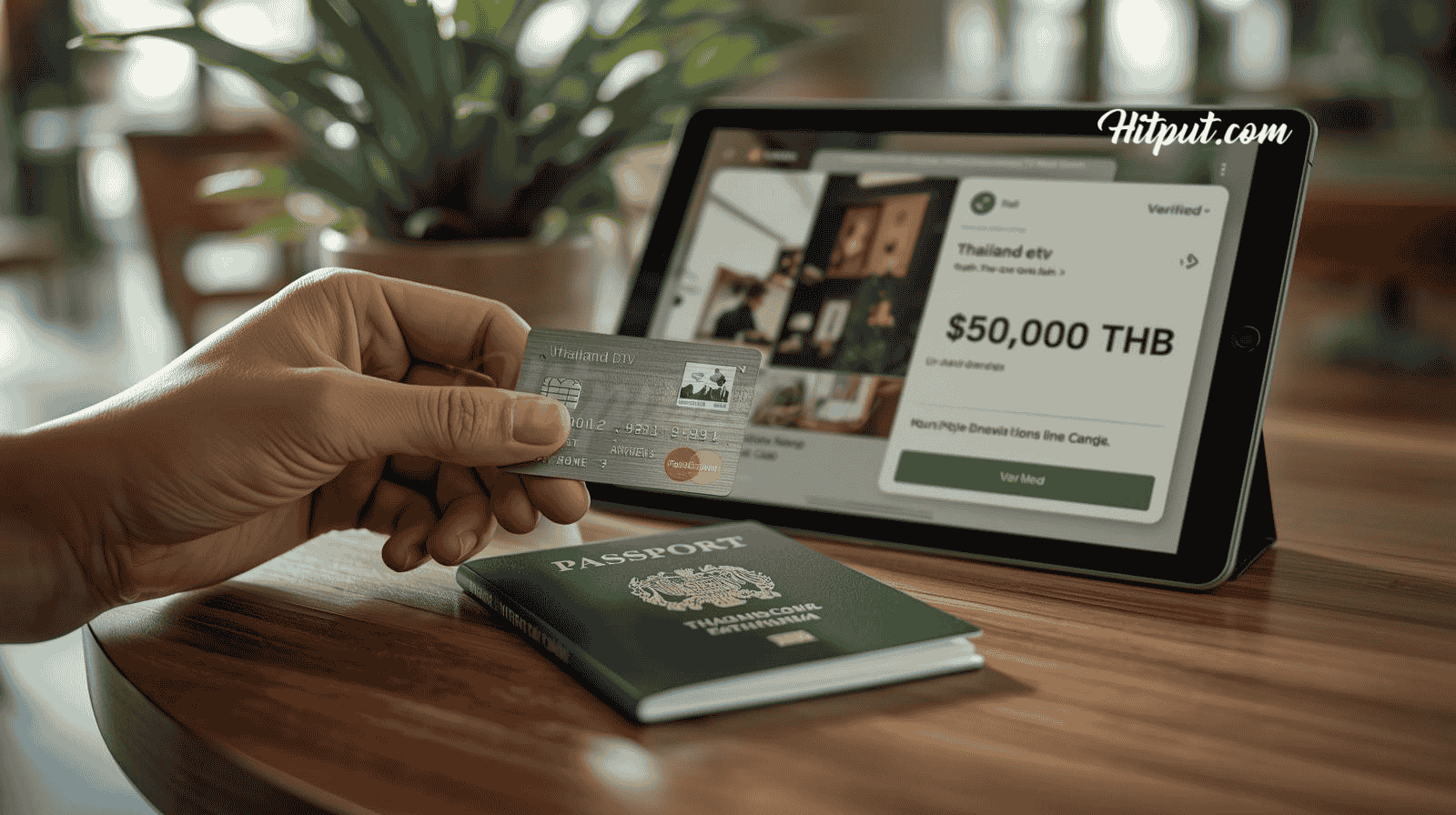
Overview:
To legally live as a digital nomad in Southeast Asia in 2026, you must meet specific financial thresholds: Thailand’s DTV requires a 500,000 THB (~$14,500) balance maintained for 3 months. Indonesia’s E33G KITAS requires proof of a $60,000/year foreign income. Additionally, Vietnam’s Decree 371 now imposes fines up to 5 million VND for e-cigarette possession. Essential tech includes AI laptops with NPUs and Saily or Airalo 5G eSIMs.
Hitput.com – Before you board your flight to Bangkok, Bali, or Da Nang, ensure you have checked off this digital nomad pre-departure checklist 2026 SE Asia. A missed document this year is more likely to lead to a ‘Refusal of Entry’ than in previous years, as immigration authorities in Thailand, Indonesia, and Vietnam have shifted toward high-tech, data-driven enforcement.
1. The “Paperwork” (Visa & Legal Compliance)
The era of the “gray area” traveler is over. 2026 immigration is data-driven and strict.
1. Thailand: The DTV “Maturity” Check
- Proof of Funds: Thailand DTV Requirements, Ensure your bank statement shows 500,000 THB (~$14,500).
Critical for 2026: Most embassies now require this balance to have been maintained for at least 90 consecutive days. “Snapshot” deposits made the week of the application are frequently rejected.
- Remote Work Status: Have a signed employment contract or professional portfolio ready.
- Application Location: Verify you are applying from outside Thailand. 2026 regulations strictly prohibit “onshore” DTV conversions.
2. Indonesia (Bali): The E33G & Entry Requirements
- Income Verification: For the E33G Remote Worker KITAS, have your tax returns or payslips ready to prove a minimum annual income of $60,000 USD.
- Financial Buffer: Provide a bank statement showing a minimum balance of $2,000 USD maintained for the last 3 months.
- QR Code Prep: Ensure you have pre-paid the Bali Tourist Tax (IDR 150,000) and completed the Electronic Customs Declaration (e-CD).
3. Vietnam: Compliance & New Laws
Decree 371 (Vaping Ban): Ensure your luggage is free of all e-cigarettes and heated tobacco products. Under the strict 2026 Decree 371, possession results in immediate fines of 3M–5M VND and potential entry issues.
Residence Registration: Coordinate with your host to ensure they can register your stay with the local police within 24 hours of arrival—a requirement now strictly monitored via the national digital portal.
Suggested Article: Digital Nomad Guide 2026 in Southeast Asia UPDATED!
2. Digital Nomad Packing List 2.0 (AI & Tech)

In 2026, “AI-Ready” isn’t a marketing term—it’s a productivity requirement.
The AI Core: Laptops must have a dedicated NPU (Neural Processing Unit). Top 2026 models include the ASUS Zenbook S14 (Intel Core Ultra Series 2) and the Microsoft Surface Laptop 7 (AI Edition). These allow for on-device AI transcription and 30+ hour battery life.
Connectivity: Pre-load a Saily or Airalo eSIM. Saily is preferred in 2026 for its Nord-backed security features, while Airalo offers broader regional “Discover” packages.
Power: A 65W GaN charger is the minimum to power AI-heavy NPUs while remaining small enough for a 20L “Slowmading” bag.
3. Budget vs. Reality: 2026 Monthly Comparison
| Category | Chiang Mai, Thailand | Da Nang, Vietnam | Uluwatu, Bali |
| Rent (1BR Studio) | $550 – $850 | $450 – $750 | $1,200 – $2,200 |
| Coworking | $145 | $115 | $230 |
| 5G Data (30GB) | $35 | $35 | $35 |
| Total Spend | $1,300 – $1,900 | $1,200 – $1,700 | $2,300 – $3,200 |
FAQ
Q: Can I apply for the Thailand DTV while already in Thailand? A: In 2026, most DTV applications must be done offshore via an e-visa portal. If you are already in-country, you typically need to exit to a nearby consulate (like Vientiane or Penang) to apply.
Q: Is $2,000 enough for a “Slow Living” lifestyle in 2026? A: In Chiang Mai and Da Nang, $2,000 provides a high-end lifestyle. In Bali (Uluwatu/Canggu), $2,000 is now the “budget-conscious” floor due to 2025–2026 rental price surges.
Q: Are there any new taxes for nomads in 2026? A: Thailand has tightened its 183-day tax residency rule. If you stay more than 183 days and bring foreign income into a Thai bank account, you may be liable for local tax.

